
Menu
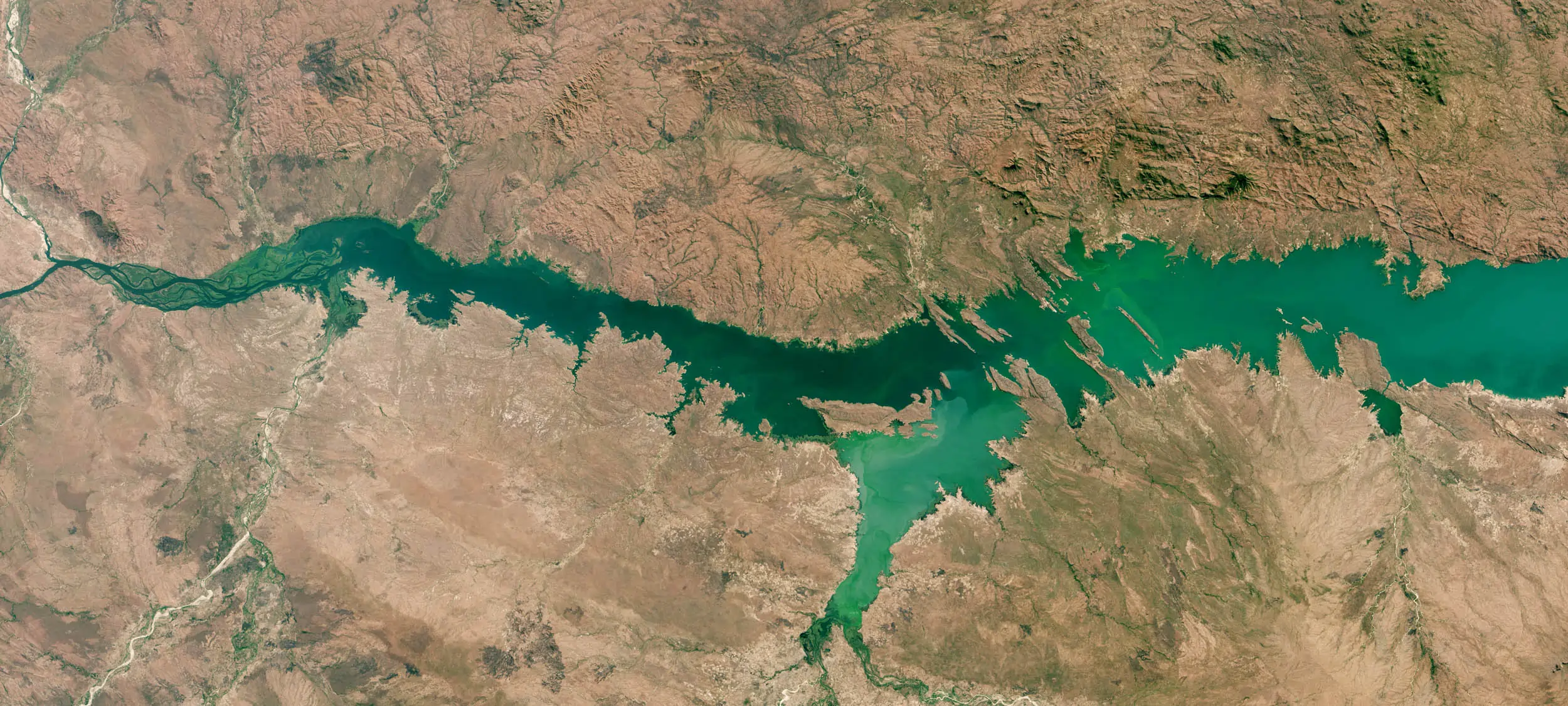
A framework for energy access, cold-chain infrastructure, and inland fisheries development to support Mozambique's Cahora Bassa Lake region
The reservoir created by the Cahora Bassa Dam presents a significant, underutilized opportunity to expand energy access in Mozambique's Tete Province. This article outlines a proposed intervention to install a 20 MW floating photovoltaic (FPV) system on Lake Cahora Bassa, paired with 30 MW of battery storage, to serve the communities of Songo, Chintholo, and Chitima as well as adjacent lakeside settlements. The system is structured as a localized hybrid mini-grid, phased to prioritize commercial anchor loads in the first stage and expand to residential and social infrastructure in the second.
The proposal is built on a core finding: the primary constraint on the Cahora Bassa fisheries value chain is not demand, which is robust and growing across Southern Africa, but post-harvest loss driven by near-total absence of cold-chain infrastructure. Reliable electricity directly addresses this bottleneck. Phase 1 directs approximately 60 percent of generation capacity to cold storage and fish processing, projected to increase annual income for small-scale fishers by 13 to 25 percent. Phase 2 brings the remaining capacity online for 4,005 households (16.2 percent of the local population), schools, and healthcare facilities.
Total upfront investment is estimated at USD $41.5 million, financed through a blended structure of grants (40%), concessional debt (30%), and commercial debt (30%). The project achieves a 25-year net present value of $3.7 million at a 5 percent internal rate of return, with a payback period of 17 years. Net lifetime emissions avoided total approximately 279,055 tCO₂e after accounting for construction-embedded emissions, consistent with Mozambique's 2021 Nationally Determined Contribution targets.
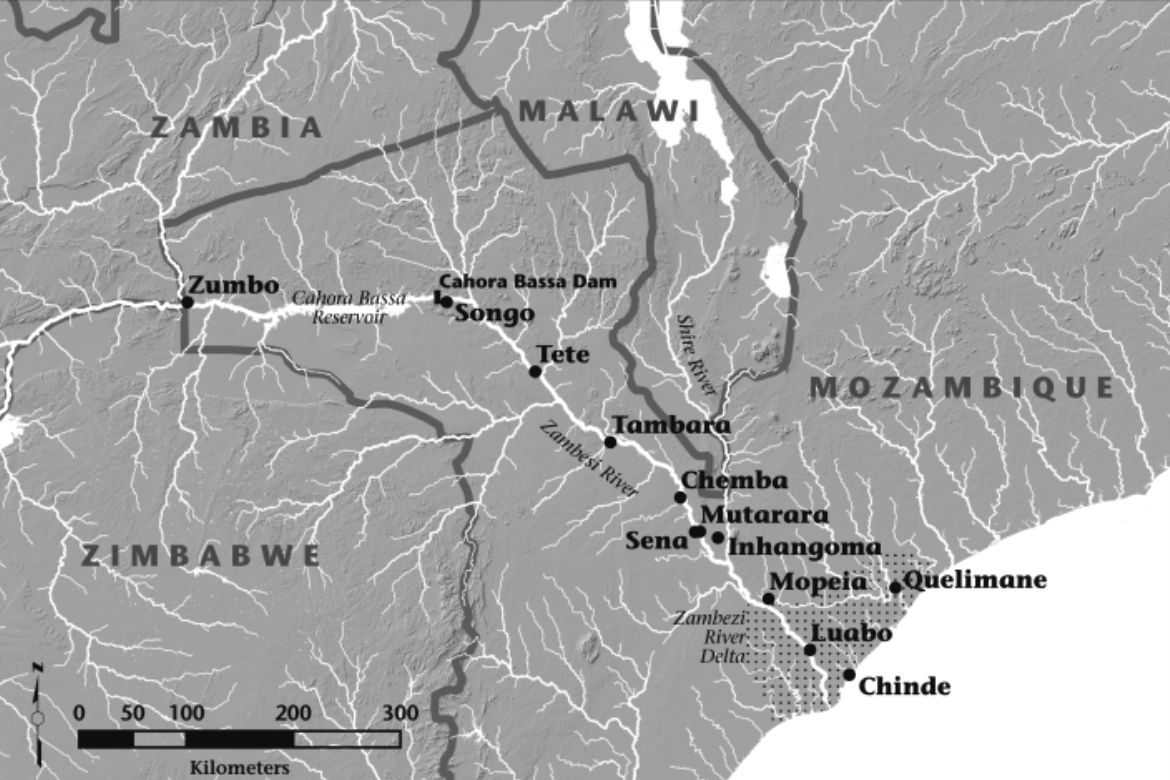
The Cahora Bassa Dam was completed in 1974 by a consortium of European and South African companies during the final year of Portuguese colonial rule. Located along the Zambian and Zimbabwean borders in the western province of Tete, the dam created a 2,739 km² lake and installed 2,075 MW of hydroelectric capacity. Its primary purpose was energy export: a 1,400-kilometer transmission line carries power south to South Africa, making Cahora Bassa the largest dam ever constructed specifically to export electricity. The dam's construction displaced over 50,000 individuals and destroyed downstream ecosystems that had supported the livelihoods of more than one million people (Isaacman, 2021).
The project was explicitly intertwined with colonial and apartheid military strategy. In exchange for South African support in suppressing anticolonial opposition, Portugal sold Cahora Bassa energy to South Africa at a fraction of market value. Displaced residents were confined in fortified settlements to prevent their participation in the FRELIMO liberation movement. After independence, Portugal retained the construction debt and majority ownership until Mozambique purchased the hydroelectric plant for $950 million in 2007. The government now holds 90 percent of shares, with Portugal maintaining a minority stake (Isaacman, 2021).
Despite this transfer of ownership, the dam's relationship with local communities has changed little. Energy exports to South Africa continue while only 15.3 percent of households in Tete Province have access to electricity (Club of Mozambique, 2023). Downstream, the dam's management according to South African energy demand has disrupted the natural flooding cycles of the Zambezi River Valley, reducing soil fertility, fish populations, and protein availability for local communities (Isaacman, 2021). The lake itself, however, remains a high-productivity fishing environment, producing approximately 10,000 tons of fish annually and supporting 20,000 livelihoods (Republic of Mozambique, 2017).
Fisheries occupy a central position in Mozambique's food security, nutrition, and rural economy. Inland fisheries contribute 23 percent of total national fish output (FAO, 2025) and play a disproportionate role in rural livelihoods. Fish accounts for 53 percent of total animal protein consumption in Mozambique, and per capita consumption is estimated at 13.9 kilograms per person per year — substantially higher than the sub-Saharan African average of 8.3 kilograms and the continental average of 10 kilograms (Maulu et al., 2024).
Artisanal and small-scale fishers provide livelihoods for over 250,000 people and account for more than 90 percent of total fishery production (FAO, 2025). The Cahora Bassa reservoir is one of the most significant inland production hubs, supporting semi-industrial and artisanal operations dominated by kapenta, a small pelagic fish with persistent demand in Zimbabwe and Zambia (IFC, n.d.). Combined fish demand across Mozambique, Zambia, Malawi, and South Africa reached approximately 790,000 metric tons in 2018, with demand projections ranging from 919,000 to 1,986,000 metric tons depending on GDP growth trajectories (The Sustainable Trade Initiative, 2020).
Despite strong and growing regional demand, artisanal fishers in the Cahora Bassa region are systematically prevented from capturing full market value by post-harvest losses. Without ice, cold storage, or reliable electricity, fishers rely on sun-drying at landing sites. Approximately 27 percent of fish in Sub-Saharan Africa is lost to spoilage, the majority during storage (Carlsson et al., 2025). These losses force distress sales, eliminate bargaining leverage, and reduce regional food availability. In 2018, approximately two-thirds of the Mozambican population lacked electricity access (World Bank, 2025). Cold storage, ice production, and basic processing all require electricity, making energy access the binding constraint at every stage of this failure.
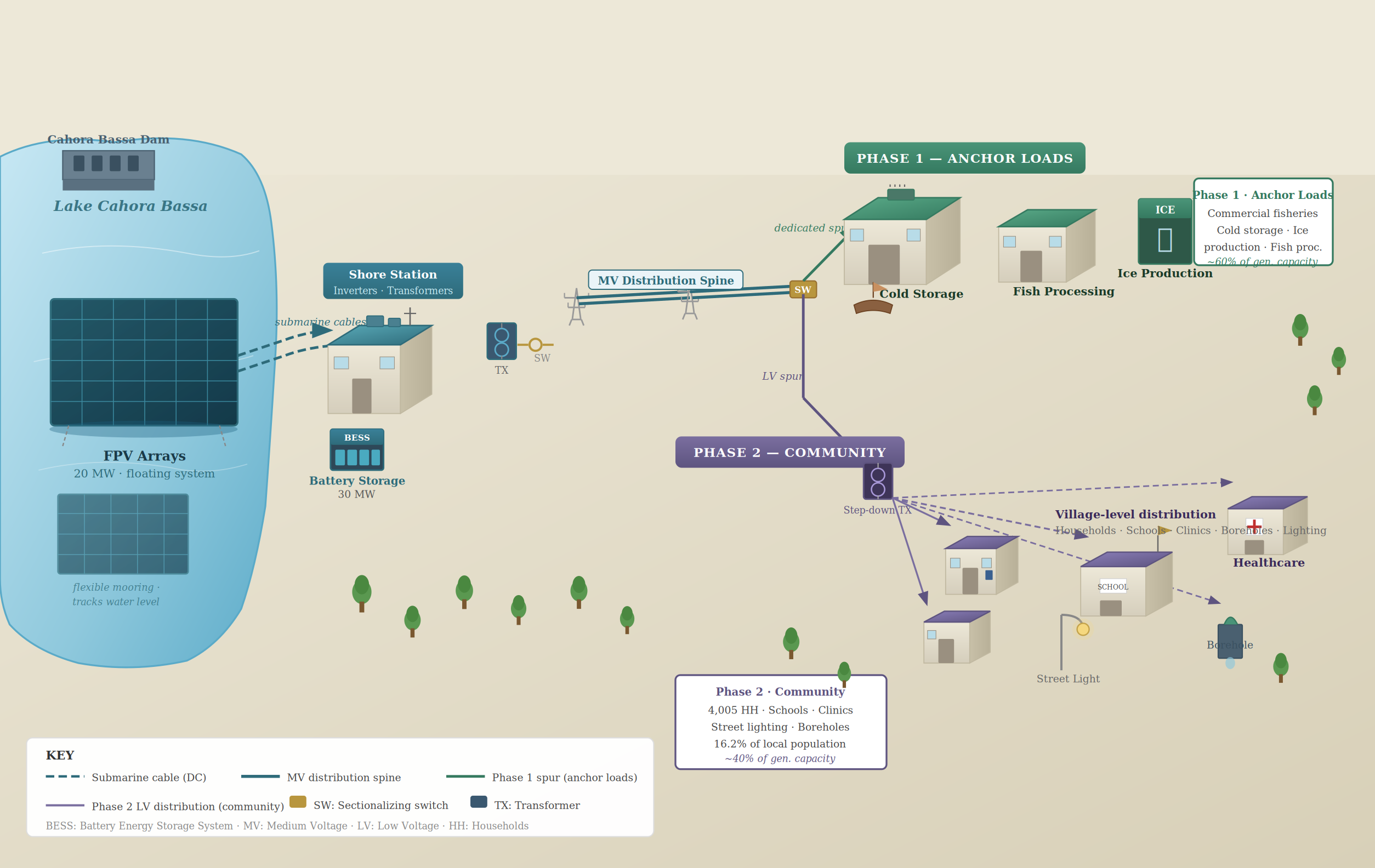
The proposed project deploys a 20 MW FPV system on Lake Cahora Bassa, paired with 30 MW of battery storage, to deliver reliable, dispatchable electricity to demand centers in Songo, Chitima, Chintholo, and adjacent lakeside settlements. The FPV arrays occupy approximately 0.4 km² of the reservoir's 2,739 km² surface area, avoiding the land acquisition and resettlement risks associated with ground-mounted solar. Operating as a localized hybrid mini-grid, the system serves households, social infrastructure, and commercial fisheries through a tiered tariff and power purchase agreement (PPA) structure designed to balance financial sustainability with affordability.
Total upfront investment is estimated at USD $41.5 million, including 20 MW of FPV capacity at $1.1 million per MW, 30 MW of battery storage at $400,000 per MW, a shore-based conversion station, medium- and low-voltage transmission and distribution infrastructure, engineering studies, and legal counsel ($7.5 million combined). Operations and maintenance costs are projected at $200,000 annually; fund management expenses add $450,000 per year.
Generation infrastructure centers on a floating PV array on the reservoir surface, fed through submarine cables to a shore-based conversion and control station housing inverters, transformers, protection systems, and primary battery storage. The station provides voltage regulation, frequency control, and load shifting. Electricity is distributed through a localized medium-voltage (MV) backbone rather than exported to the national grid. Dedicated spur lines connect anchor fisheries directly to the MV backbone, ensuring uninterrupted power for cold storage and processing facilities. At the village level, step-down transformers enable low-voltage distribution to clustered households, micro-enterprises, irrigation pumps, clinics, and schools.
Phase 1 prioritizes anchor commercial loads — specifically existing fisheries requiring cold-chain storage — at approximately 60 percent of total generation capacity, supplying an estimated 15,036 MWh per year. These anchor loads provide stable baseload demand and early revenue, reducing financial risk before residential expansion begins. Phase 2 brings the remaining 40 percent of capacity online for households and social infrastructure, supplying an estimated 10,024 MWh per year. Battery storage supports both phases by smoothing solar intermittency and enabling evening access.
The project is geographically constrained to communities immediately adjacent to the lake and the urban centers of Songo, Chitima, and Chintholo, avoiding long-distance transmission corridors that would substantially increase capital costs. Shore-based infrastructure takes advantage of existing access roads, minimizing additional land disturbance. FPV systems' flexible mooring technology allows arrays to rise and fall with reservoir water levels without requiring changes to dam operations. The installation's ecological footprint is minimal at 0.4 km², and shading-related effects on plankton productivity or fish habitat are expected to be highly localized (Benjamins et al., 2024). Routine environmental monitoring is incorporated into the operational plan.
The project's primary emissions reduction mechanism is displacement of diesel-based electricity generation used by commercial fisheries and cold-chain facilities, supplemented by avoidance of future grid electricity consumption as household and social-service connections expand. Phase 1 avoids approximately 12,029 tCO₂e annually, applying the UNFCCC/CDM default diesel emissions factor of 0.8 tCO₂e per MWh. Phase 2 avoids an additional 1,002 tCO₂e per year using a Mozambique-specific grid emissions factor of 0.1 tCO₂e per MWh.
Over the project lifetime, Phase 1 diesel displacement delivers approximately 300,720 tCO₂e of avoided emissions across 25 years; Phase 2 grid displacement contributes an additional 22,053 tCO₂e across 22 years. Total gross avoided emissions are approximately 322,773 tCO₂e. Lifecycle construction emissions, estimated at 73.3 kg CO₂e per MWh from a comparable installation, total approximately 43,718 tCO₂e. The net lifetime emissions reduction is approximately 279,055 tCO₂e, consistent with Mozambique's 2021 NDC targets and its implementation plan for 20 MW of additional solar capacity in Tete Province (Republic of Mozambique, 2021).
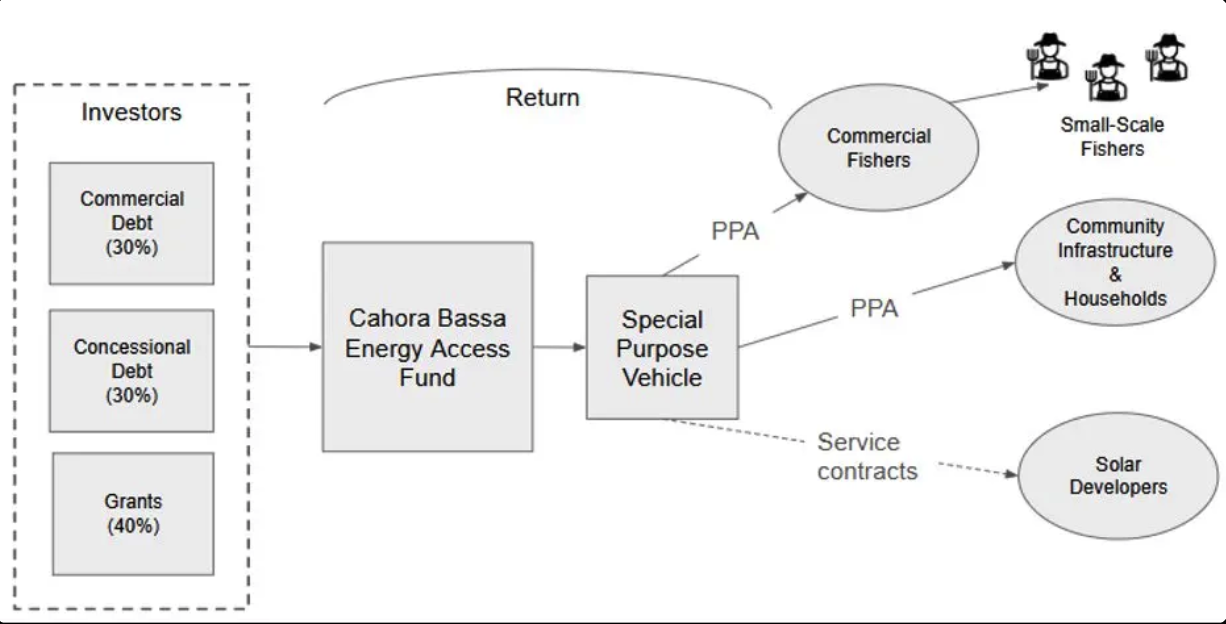
The project is financed through a blended structure. An investment fund — the Cahora Bassa Energy Access Fund — raises capital and channels equity into a special purpose vehicle (SPV). The SPV contracts solar developers and serves as the counterparty to all PPAs. Returns flow from PPA revenues back to investors through interest on loans to the fund.
Grants of $16.6 million (40 percent) are targeted from mission-aligned foundations including the Rockefeller Foundation, Shell Foundation, and Aqua Spark Foundation. Concessional debt of $12.45 million (30 percent) at 4 percent is sought from development banks such as the African Development Bank and the World Bank. Commercial debt of $12.45 million (30 percent) at 9 percent targets Mozambican and European banks or impact investors such as Camco Investment Management.
Revenue is generated through a tiered tariff and PPA system. The base residential price is $0.1058/kWh, reflecting the national utility average (Salite, 2021). Social-service entities including schools and healthcare facilities receive a 20 percent subsidy at $0.0846/kWh. Commercial fisheries that do not meet small-scale fisher engagement targets pay $0.2645/kWh, still below the diesel generation cost of approximately $0.30/kWh (Penn State Extension, 2023). Operators that service at least 100 small-scale fishers, increase engagement by 10 percent annually, and provide cold-chain access qualify for the subsidized commercial rate of $0.1587/kWh. This structure creates a direct financial incentive for commercial fisheries to expand inclusive access rather than concentrate energy benefits at the commercial tier.
The project's success depends on coordinated engagement across four stakeholder groups whose roles span energy, fisheries, markets, and regulation. Small-scale and semi-industrial fishers are the primary anchor customers; through PPAs, they secure electricity for cold storage, ice production, and fish processing, enabling access to higher-value regional markets and improving income stability. Local communities along the reservoir are secondary off-takers and primary social beneficiaries, gaining access to lighting, water pumping, healthcare, and educational infrastructure. Electrified schools have been shown to outperform non-electrified schools on key educational indicators (UNDESA, 2014), and clean energy access is associated with reductions in air pollution-related mortality (Byaro, 2024). Regional and domestic fish buyers play an indirect but commercially critical role, driving demand for higher-quality, reliably supplied product. Regulatory and sectoral authorities, including Mozambique's energy regulator ARENE and the Ministry of Sea, Inland Waters and Fisheries, provide the enabling institutional environment for licensing, environmental compliance, and coordination with existing hydropower infrastructure.
The core risk management strategy is early de-risking through anchor-load commissioning. Phase 1 validates technical performance and secures revenue before Phase 2 extends service to surrounding communities. Five material risk categories have been identified.
Political and regulatory risk is reduced by the project's inland location, which limits direct exposure to the security concerns concentrated in the northern coastal province of Cabo Delgado. Regulatory delay is the more proximate risk; mitigation involves front-loading permits and consultations and conditioning procurement on key approvals.
Currency and macroeconomic risk arises from MZN-denominated revenues against USD-linked debt service obligations. Mitigation includes USD-linked revenue structures, concessional financing to reduce debt burden, and cash reserves to absorb exchange rate volatility.
Technical reliability and performance risk — including solar generation variability, battery degradation, and equipment failure — is addressed through detailed engineering design, conservative battery sizing for critical cold-chain loads, and performance guarantees in EPC and O&M contracts.
Climate and hydrological risk from extreme drought and flooding is mitigated through flexible mooring design for the full range of observed water-level variation, conservative engineering margins, and ongoing hydrological monitoring.
Commercial and social acceptance risk — including anchor PPA underperformance and household affordability constraints — is addressed by securing PPAs prior to full buildout, using tiered tariffs that protect low-income households and essential services, and maintaining transparent connection sequencing. Ecological risk from shading effects beneath the panels remains an area of active scientific inquiry (Oliveira, 2025); the project's minimal footprint and routine environmental monitoring substantially mitigate ecosystem-scale impact.
Full engineering design and site assessments are completed, including bathymetry surveys, anchoring and mooring studies, MV network routing, detailed load modeling, and battery sizing. An Environmental and Social Impact Assessment and community stakeholder consultations run in parallel. Regulatory milestones include ARENE mini-grid licensing, land and shore-side access permissions, grid interconnection studies, and hydropower hybridization modeling. Commercial milestones include PPA execution with anchor fisheries and tariff framework agreements for all off-taker categories. The phase concludes with blended-finance structuring, DFI engagement, and EPC and O&M partner selection.
FPV arrays are deployed to 60 percent of capacity, the shore-based power conversion station is constructed, and the MV spine is installed connecting the system to cold-chain anchor loads. The battery bank becomes operational and commercial PPAs are activated, generating early revenue while operational performance data is collected and analyzed.
The remaining 40 percent of FPV capacity is deployed, and medium- and low-voltage distribution is extended to surrounding communities. Village-level transformers and household metering systems are installed. Medical clinics, schools, street lighting, and borehole pumps are connected. Operational lessons from Phase 1 are incorporated into Phase 2 design and deployment.
The tiered pricing structure incentivizes commercial fishers to adopt and expand outgrower models providing small-scale fishers access to cold-chain infrastructure. Access to cold storage is projected to increase annual income by 13 to 25 percent for an estimated 4,400 small-scale fishers. This range derives from conservative assumptions: approximately 50 percent of catch is currently lost to spoilage at landing sites (Aminu, 2023), and the intervention is modeled to reduce spoilage by 20 percent for participating fishers (The Lab, 2024). The Chicoa Fish Farm's existing outgrower engagement with 450 small-scale fishers serves as the conservative baseline, with a required 10 percent annual engagement increase (De Jonge, 2020).
Average monthly income in Mozambique ranges from approximately $30 to $59 (360 Mozambique, 2021; Salite, 2021). Off-grid electricity consumption averages 0.24 kWh per day (Tamele, 2025). At the residential tariff of $0.1058/kWh, electricity would represent 1.31 to 2.57 percent of a household's annual income. The combined population of Songo, Chintholo, and Chitima is approximately 114,000 people (Mozambique Data Portal, 2016), with an average household size of 4.6 (MNA International, 2023). The project's generation capacity is sufficient to power 4,005 households, raising the Tete Province electricity access rate from 15.3 percent to approximately 31.5 percent (Club of Mozambique, 2023).
The Cahora Bassa Dam has historically extracted value from Mozambique's inland waterways while denying energy access to the communities that live alongside them. The colonial and apartheid-era architecture of that extraction has left a 15.3 percent household electrification rate in a province that hosts one of sub-Saharan Africa's most productive freshwater fisheries. The intervention outlined in this paper does not attempt to undo that history, but it does redirect the lake's productive capacity toward the communities that bear its legacy.
A 20 MW FPV system on Lake Cahora Bassa, financed through blended capital and structured around a fisheries-anchored revenue model, is technically feasible, financially viable at blended cost of capital, and analytically grounded in the region's specific constraints. The cold-chain bottleneck is real, the demand for its resolution is demonstrated, and the energy pathway to address it is available. The tiered pricing structure ensures that benefits extend to the small-scale and artisanal fishers who dominate the lake's labor force rather than accruing exclusively to commercial operators.
Beyond Cahora Bassa, the model is replicable. Other hydroelectric reservoirs across sub-Saharan Africa, including the Kapichira Dam near Blantyre, Malawi and the Kariba Dam on the Zambia-Zimbabwe border, present analogous opportunities. In the United States, reservoirs created by federally owned dams have been estimated to support FPV installations capable of generating up to 77,000 MW annually (National Laboratory of the Rockies, 2025). Further research on the ecological effects of large-scale FPV deployment on freshwater systems will be essential to responsibly scaling this model (Oliveira, 2025).

Scroll to the bottom to view full PDF report, which includes all footnotes, figures, images, and more

